Programmatic digital out-of-home (pDOOH) is transforming outdoor advertising in Hong Kong. Instead of booking a billboard for a fixed period and running the same creative 24/7, programmatic buying allows advertisers to target specific audiences, times, and conditions — bringing the precision of digital marketing to the physical world of billboards.
XGD Media pioneered programmatic outdoor advertising in Hong Kong with the launch of the 26W LED billboard at Lan Kwai Fong in 2015 — Hong Kong's first programmatic-capable billboard. Since then, XGD Media's programmatic campaigns have won three consecutive Spark Awards for Best Media Campaign – Out-of-Home/DOOH (2021, 2022, 2023).
What Is Programmatic DOOH?
Programmatic DOOH is the automated buying and selling of digital billboard advertising through demand-side platforms (DSPs). Instead of negotiating directly with a billboard operator for a fixed time slot, advertisers use a DSP to bid on billboard impressions in real time — similar to how online display advertising is bought programmatically.
The key difference from traditional billboard booking: with programmatic DOOH, the advertiser pays for targeted impressions rather than a fixed time period. This means the creative can be triggered to appear only when specific conditions are met — for example, only during rush hour, only when it's raining, only when a specific audience segment is detected near the screen, or only when a connected data source triggers a change.
How Programmatic DOOH Works in Practice
A typical programmatic DOOH campaign on XGD Media's billboard network works as follows:
The advertiser and their media agency define the target audience, campaign objectives, and triggers through a DSP (demand-side platform) such as Hivestack. Audience data from data partners — including mobile location data, demographic profiles, and behavioural segments — is used to build targeting criteria. For example, a ride-hailing company might target screens near nightlife districts during peak evening hours when ride demand is highest.
The DSP evaluates available billboard inventory in real time. When the targeting conditions are met (right time, right audience density, right weather), the campaign creative is served to the billboard screen automatically. The entire process happens programmatically — no manual scheduling required.
Campaign performance is tracked in real time through the DSP dashboard, with metrics including impression counts, play verification, audience composition, and campaign pacing. Optimisation can happen in-flight: if certain times of day or conditions are delivering better results, the campaign can be adjusted dynamically.
Real Examples of Programmatic DOOH in Hong Kong
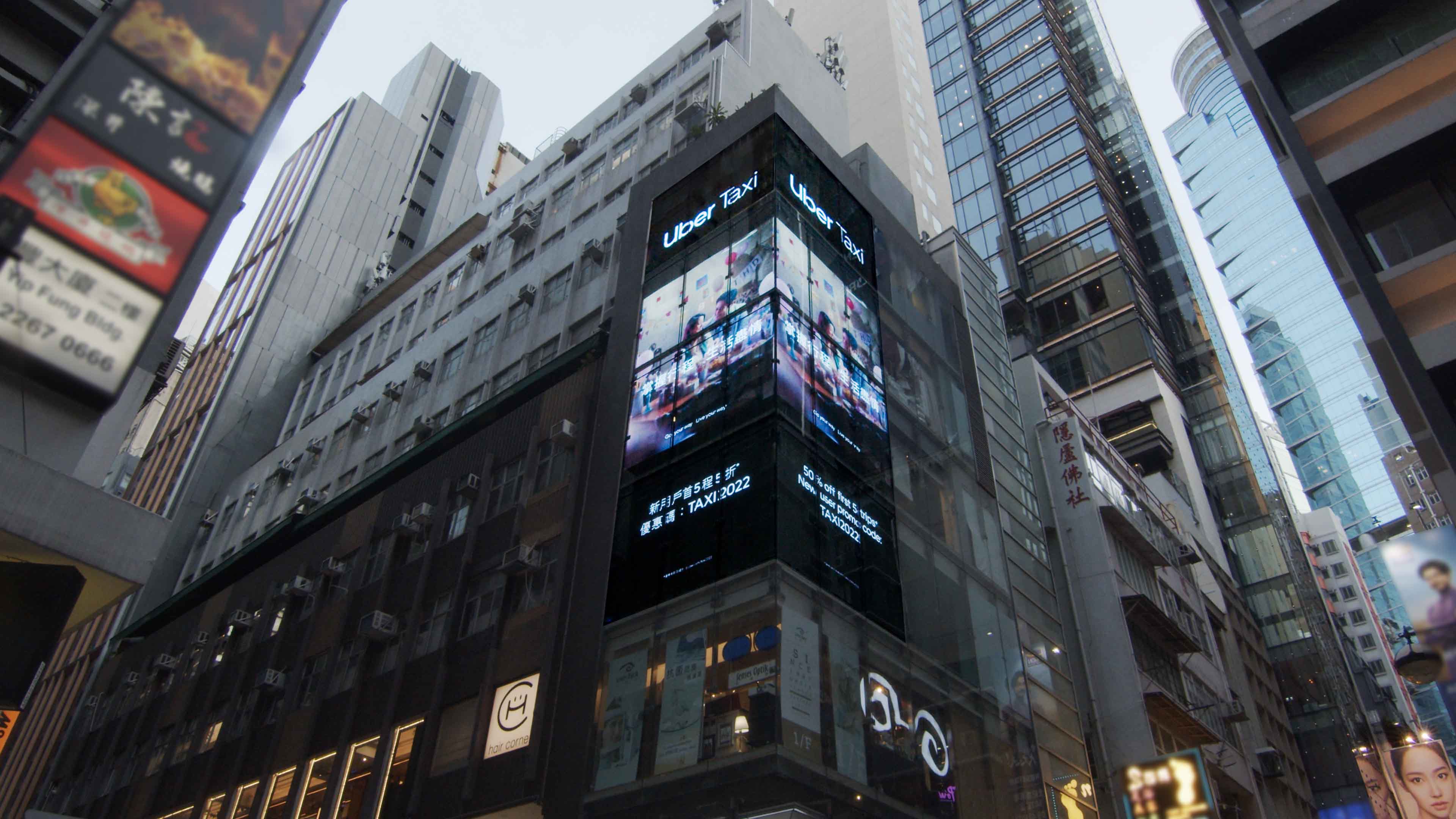
Uber Taxi: XGD Media partnered with EssenceMediacom, GroupM, and Hivestack to execute a programmatic DOOH campaign for Uber Taxi on the 26W billboard. The campaign used Vpon mobile data to identify audience segments — daily commuters near petrol stations, CBD locations, and shopping areas — via geofencing. Weather-based triggers optimised creative delivery in real time. The campaign won the Spark Award three years running and the IAB Gold for Best Use of Programmatic Advertising.
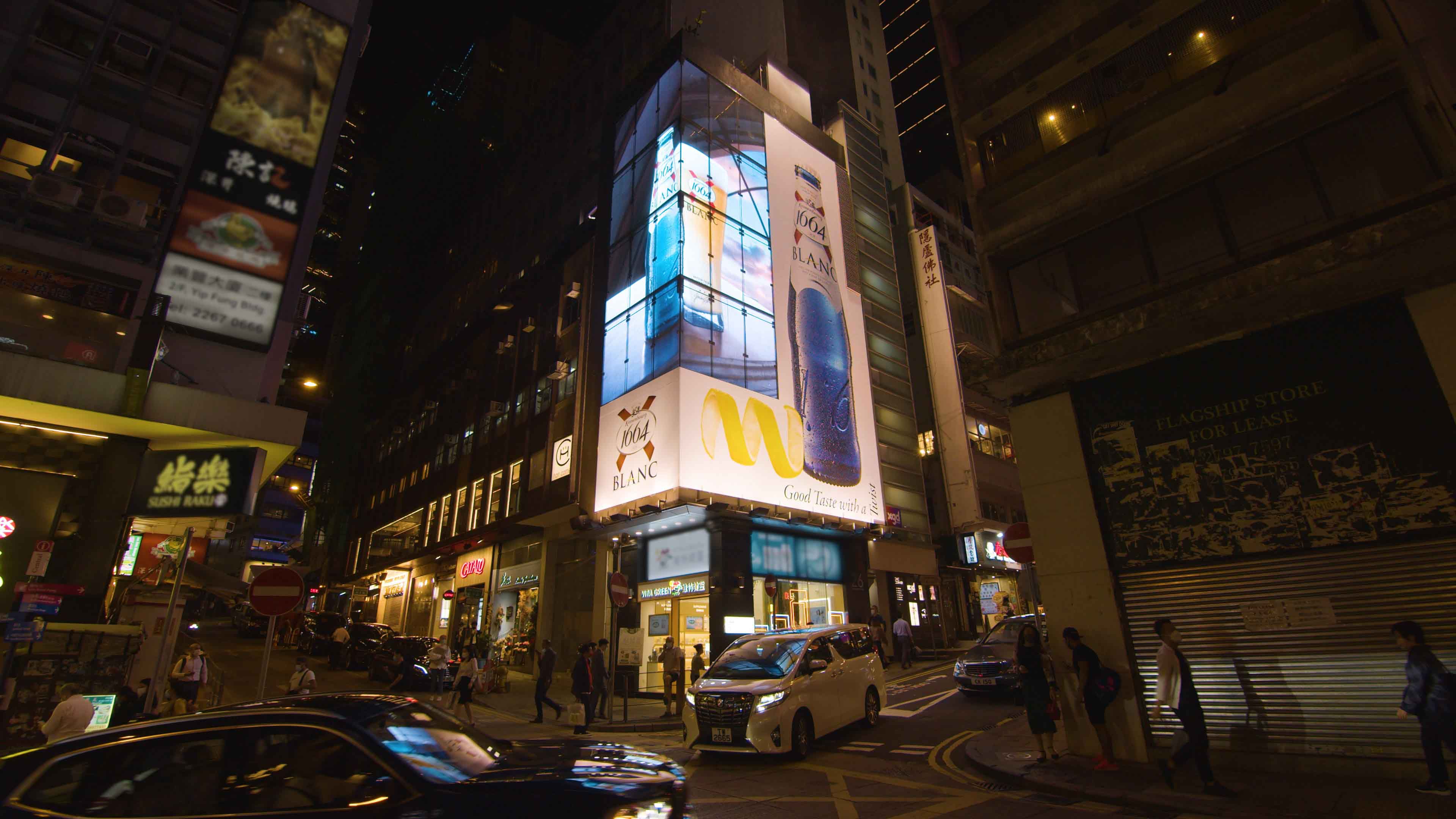
Kronenbourg 1664 Live Countdown: XGD Media coded a fully automated programme for the 26W billboard that displayed a New Year's countdown timer synced to the world clock with millisecond accuracy, automatically alternated between different creatives, and included a physical sticker extension that increased billboard size by over 200%. The campaign won a Spark Award.
Hong Kong Tourism Board: XGD Media's 26W billboard live-streamed user-generated content from the @discoverhongkong Instagram account in real time , creating an interactive loop between social media engagement and physical billboard display.
Snapask DSE Countdown: At the LFR billboard in Causeway Bay, XGD Media built a fully automated creative that generated new content daily showing the countdown to Hong Kong's DSE examinations — reaching 6.2 million monthly pedestrians. The campaign won a Silver Spark Award.
Benefits of Programmatic DOOH
Precision targeting: Reach specific audience segments at specific times and conditions, rather than broadcasting to everyone 24/7.
Real-time optimisation: Adjust campaign pacing, targeting, and creative in-flight based on performance data.
Weather and event triggers: Automatically serve weather-appropriate creative (e.g., promote cold drinks when temperature exceeds 30°C) or event-triggered content.
Measurable results: Programmatic campaigns provide impression-level reporting, audience analytics, and proof of play — closing the measurement gap that has historically challenged outdoor advertising.
Budget efficiency: Pay for targeted impressions rather than fixed time periods, potentially reducing waste and improving cost-per-target-impression.
Cross-channel integration: Programmatic DOOH can be bought through the same DSPs used for online display, mobile, and video advertising, enabling unified audience targeting across channels.
Common questions
How does programmatic DOOH differ from booking a billboard directly?
A direct booking reserves a screen for a fixed period, and the same creative runs throughout. Programmatic buying reserves targeted impressions instead: the creative is served when your conditions are met — a chosen daypart, a weather trigger, or an audience segment detected near the screen. Direct booking is simpler and gives guaranteed presence; programmatic gives precision and in-flight optimisation. Both are available across XGD Media's network.
What is the minimum budget for a programmatic DOOH campaign in Hong Kong?
Campaigns on standard sites start from around HK$42,000 per week, the same entry rate that applies to static and large-format digital placements. Landmark and full-takeover sites are quoted individually rather than from a standard rate, and there is no standard upper limit — cost scales with site, format and duration. Rates are indicative and vary with location, season and booking length.
Which XGD Media screens support programmatic buying?
XGD Media operates named large-format LED sites including 26W at Lan Kwai Fong in Central and LFR in Causeway Bay. Coverage spans Hong Kong Island, Kowloon and the New Territories across 40+ advertising locations, and specific sites beyond the standing network can be sourced on request.
How quickly can a programmatic campaign go live?
A campaign can go live in as little as 7 days from confirmation. Premium sites in peak season should be booked two to three months in advance, and minimum booking period varies by site and campaign rather than following a fixed network-wide rule.